A hospital announcement system is a critical component of communication in medical facilities, ensuring that staff, patients, and visitors receive clear and timely information. Whether used for routine updates, emergency alerts, or patient calls, these systems provide a reliable method for broadcasting messages across multiple areas. Hospitals are complex environments where seamless coordination is essential, and an effective public address system for hospital use plays a key role in managing daily operations efficiently.
One of the primary functions of a hospital PA system is to provide instant emergency notifications. In the event of a fire, security incident, or medical emergency, the ability to broadcast urgent messages across wards, corridors, and waiting areas can be life-saving. Routine announcements are equally important, allowing staff to call doctors, relay visitor information, and manage patient flow. Beyond voice announcements, background music in hospitals is commonly used in waiting rooms and reception areas to create a more comfortable environment for patients and visitors.
There are different types of PA system for hospital applications, each designed to suit the needs of various medical settings. Traditional 100V line systems use high-impedance speakers that enable sound to be transmitted over long distances without signal degradation. These are ideal for large hospitals where multiple zones require uniform coverage. In contrast, hospitality IP audio systems offer advanced digital control, allowing messages to be scheduled, targeted to specific areas, and integrated with other hospital infrastructure such as nurse call systems and security networks. Whether using an analogue or digital setup, a well-designed hospital announcement system ensures efficient communication and enhances operational effectiveness in a busy healthcare environment.
How Hospital PA Systems Work
A PA system for hospital use consists of several key components that work together to deliver clear and reliable audio across different areas. The system typically includes amplifiers, microphones, speakers, and zone controllers. Amplifiers ensure that audio signals are powerful enough to be transmitted across large spaces, while microphones allow staff to make announcements from designated locations. Zone controllers enable hospitals to direct messages to specific areas, ensuring that announcements reach only the intended audience.
100V line speakers are commonly used in hospitals due to their efficiency in distributing sound over long distances. Unlike standard low-impedance speakers, which can lose audio quality when connected over extended wiring, 100V systems maintain consistent volume and clarity across multiple floors and departments. Ceiling-mounted speakers are frequently installed in wards, corridors, and waiting rooms to provide even sound distribution without disrupting the hospital’s aesthetic. Wall-mounted or horn speakers may also be used in external areas, such as car parks or ambulance bays, where high-output audio is required.
In modern hospitals, IP-based public address systems for hospitals provide a more flexible and scalable alternative to traditional wired setups. These systems use network connectivity to transmit announcements, allowing staff to schedule messages, control volume levels remotely, and integrate the PA system with hospital IT infrastructure. An IP audio system can be managed from a central control panel or even a remote device, ensuring that emergency alerts and scheduled announcements are delivered with precision. With the ability to manage multiple zones independently, hospitals can adjust volume levels in different areas, ensuring that critical announcements are heard without causing unnecessary disruption.
Key Features of a Public Address System for Hospital Use
A hospital announcement system must provide instant and reliable communication across multiple departments and zones. One of its most critical functions is emergency broadcast capabilities, ensuring that fire alarms, evacuations, and medical alerts are communicated without delay. Hospitals must be able to issue urgent messages, such as fire evacuation notices or code alerts, across all areas simultaneously or to specific departments as needed. A well-designed hospital PA system allows for real-time emergency paging, ensuring that both staff and patients receive clear and immediate instructions during critical situations.
Zoned audio control is another essential feature, enabling different areas within the hospital to receive customised announcements or background music in hospitals without disrupting other departments. High-dependency units, for example, require minimal noise, while reception areas may benefit from soft background audio. Staff-only areas can receive operational updates without these messages being broadcast to patient spaces. A public address system for hospital use must provide the ability to isolate or combine different zones based on the hospital’s needs, ensuring optimal communication without unnecessary disturbances.
For a hospital PA system to be truly effective, clear voice transmission is essential. The acoustics of a busy hospital can be challenging, with background noise from medical equipment, conversations, and patient movement potentially making announcements difficult to hear. High-quality 100V line speakers and digital processing technology ensure that all announcements remain intelligible, even in noisy environments. Paging microphones with noise-reducing features further enhance clarity, ensuring that every message is received accurately by those who need to hear it.
Integration with other hospital systems is another key feature of a hospitality IP audio system, allowing seamless communication between the hospital announcement system, fire alarms, CCTV, and nurse call systems. In an emergency, the PA system can automatically broadcast evacuation instructions when triggered by a fire alarm, ensuring rapid response without requiring manual intervention. Integration with security systems allows alerts to be issued in response to potential threats, while connection with nurse call systems ensures that staff can make real-time announcements when assistance is needed. By combining all communication channels into a single, cohesive system, hospitals can maintain a high level of safety and efficiency.
Benefits of a Reliable Hospital PA System
A hospital announcement system plays a crucial role in improving communication within a medical facility. Hospitals operate in a fast-paced environment where quick and efficient messaging can make a significant difference in patient care and staff coordination. A PA system for hospital use ensures that doctors and nurses receive immediate updates regarding emergencies, shift changes, and patient status. Visitors and patients also benefit from clear instructions regarding appointments, ward locations, and hospital policies, reducing confusion and improving overall efficiency.
Safety and security are primary concerns in any hospital setting, and a public address system for hospital environments enhances both. During emergencies, such as fires, security threats, or major medical incidents, the ability to broadcast clear and immediate instructions can prevent panic and guide individuals to safety. Hospitals must comply with strict health and safety regulations, and a hospital PA system ensures that all emergency communications reach the right people at the right time. Whether used for a full-site evacuation or department-specific alerts, the PA system provides a reliable means of emergency communication.
Beyond its practical communication functions, background music in hospitals serves an important role in patient comfort and well-being. Research has shown that soft background music in waiting areas and patient wards can help reduce anxiety, particularly in high-stress environments such as accident and emergency departments. Music also contributes to a more pleasant experience for visitors, creating a calmer atmosphere in waiting rooms and reception areas. A hospitality IP audio system allows for background music to be managed separately from announcements, ensuring a balance between patient comfort and operational efficiency.
Effective staff coordination is another major benefit of a PA system for hospital use. Medical teams rely on fast and accurate messaging to ensure that the right personnel are dispatched to urgent situations. Internal paging systems reduce response times by allowing specific doctors, nurses, or specialists to be called instantly without relying on telephone systems. This reduces delays, ensures better workflow management, and ultimately improves patient care. By providing an organised and efficient communication channel, a hospital announcement system helps hospitals run smoothly while maintaining high levels of safety and service quality.
Choosing the Right Hospital Announcement System
Selecting the most suitable hospital announcement system depends on various factors, including hospital size, communication needs, and integration with existing infrastructure. One of the key considerations is whether to use a wired or wireless PA system for hospital applications. Traditional 100V line systems are widely used in hospitals due to their reliability and ability to transmit audio over long distances without signal loss. They are ideal for large-scale installations where consistent audio coverage is required. In contrast, hospitality IP audio systems offer greater flexibility, using network-based technology to allow remote control, scheduling, and zoned messaging. While IP-based systems provide scalability and digital clarity, they require a stable hospital network infrastructure to function effectively.
Scalability is a crucial factor when designing a PA system for hospital use. As hospitals expand, whether through additional buildings, new wards, or increased patient capacity, the announcement system must be able to accommodate these changes. A modular approach allows hospitals to add more speakers, amplifiers, and microphones without replacing the entire system. IP-based public address systems for hospitals are particularly well-suited for scalability, as new zones can be integrated without the need for extensive cabling.
The selection of microphones and speakers impacts the effectiveness of a hospital PA system. Paging microphones can be either wired, wireless, or gooseneck, depending on the hospital’s requirements. Wired microphones offer reliability, while wireless options provide mobility for staff making announcements from different locations. Gooseneck microphones are commonly used in reception areas and nurse stations for easy hands-free operation. Speaker selection is equally important, with ceiling speakers being the preferred choice for general announcements and wall-mounted speakers offering directional sound for corridors and waiting areas. Horn speakers are used in outdoor spaces such as ambulance bays, ensuring that announcements remain audible even in noisy environments.
Several installation considerations must be addressed when implementing a public address system for hospital use. The system must provide full coverage across all necessary areas, ensuring that announcements are heard clearly without dead zones. Power supply reliability is essential, with hospitals often using backup power sources to prevent disruptions. Regular maintenance is also a key requirement, ensuring that speakers, amplifiers, and control panels remain in optimal working condition. Whether installing a new hospital announcement system or upgrading an existing one, careful planning is essential to ensure seamless operation.
Conclusion
A hospital PA system is a vital component of healthcare communication, supporting emergency response, staff coordination, and patient engagement. By delivering clear and effective messaging, it enhances safety, ensures smooth hospital operations, and improves the overall experience for staff and visitors. Whether for routine announcements, emergency alerts, or background music in hospitals, a reliable PA system plays a central role in maintaining an organised and efficient medical environment.
Modern hospitality IP audio systems offer advanced functionality, allowing hospitals to manage announcements remotely, integrate with security networks, and expand as their needs grow. Traditional 100V line systems remain a dependable choice for large hospitals requiring extensive wired coverage. Both options provide essential communication capabilities tailored to different hospital structures.
With a range of hospital announcement systems available, medical facilities can select a solution that meets their operational demands. From small clinics to multi-building hospital complexes, an effective PA system for hospital use ensures that critical information is always delivered with clarity and precision.



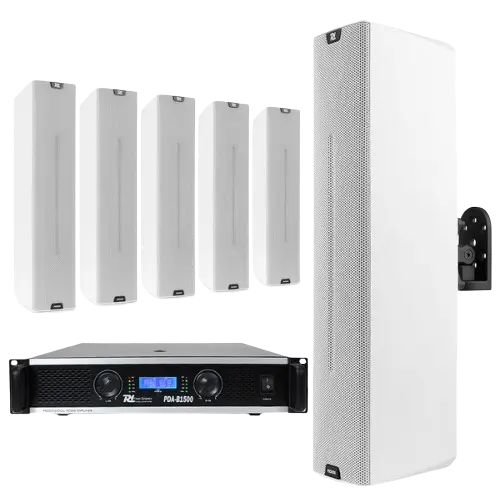
 In stock4x PD PDS50W 6.5” 40W Hanging Pendant Speakers with PRM240 Amp - 100V£629.99
 In stock8x PD PDS50W 6.5” 40W Hanging Pendant Speakers with PRM360 Amp - 100V£1,079.99
 In stock12x PD PDS50W 6.5” 40W Hanging Pendant Speakers with PRM360 Amp - 100V£1,420.00
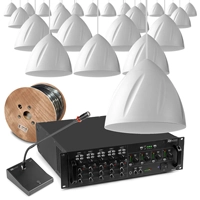 In stock4-Zone Audio Matrix Amp with 24x PDS50W Hanging Pendant Speakers & MicRegular Price £2,989.99 Special test Price £2,920.00
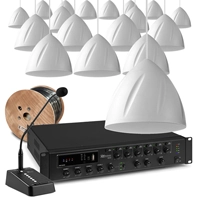 In stock18x PDS50W Commercial Pendant Speaker System with 6-Zone Paging MicRegular Price £2,800.00 Special test Price £2,789.99