


Audio system design plays a vital role in how modern buildings communicate, operate and create the right atmosphere for the people who use them. From schools and offices to retail spaces and hospitality venues, a well-planned system ensures speech is clear, music is balanced, and announcements are delivered reliably.
A successful installation is never just about speakers and amplifiers. It begins with understanding the building, how the space is used and what the client needs both now and in the future. That is why careful audio system design is so important. It reduces guesswork, avoids unnecessary costs and results in a system that performs consistently day after day.
At Audio Installations, we support projects of all sizes across the UK. We supply a wide range of carefully configured, ready-made systems for common applications, making it straightforward to find solutions for schools, shops, offices, warehouses, churches, hospitality and fitness settings. These packages provide a practical starting point for many environments.
However, not every building fits into a standard template. Our team also provides custom audio system design services, creating systems that reflect the layout, usage and technical requirements of each site. Whether you need simple background music or a multi-zone announcement system, we can advise, design and deliver a solution that works for your space.
In this blog, we will explain the principles behind effective commercial audio system design, from understanding your building’s requirements through to selecting the right equipment and planning for future expansion. We will look at both ready-made system packages and custom solutions, helping you decide which approach best suits your project.
Understanding the Purpose of the Space
Every successful project begins with clear sound system planning. Before choosing equipment, it is essential to understand exactly how the space will be used and what the system needs to achieve on a daily basis.
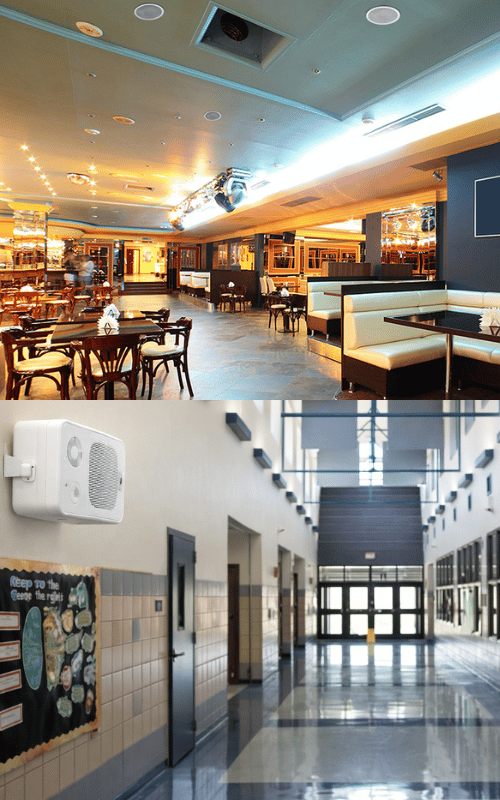
A school may require reliable announcements across multiple classrooms and corridors. A retail shop might prioritise consistent background music that creates the right atmosphere without overpowering conversation. In an office, zoning can be important so that reception, meeting rooms and breakout areas are controlled independently.
The physical characteristics of the building also play a major role in effective audio design for buildings. Ceiling height, wall materials and room shape all influence how sound travels. Hard surfaces can cause reflections, while large open areas may require more speakers to achieve even coverage.
Ambient noise levels should also be considered. Hospitality venues, for example, often need systems capable of delivering clear music over customer chatter, while places of worship may prioritise speech clarity above all else.
Future plans are another key part of audio system design. Will the space expand? Will additional zones be needed later? Building flexibility into the design at an early stage can prevent disruption and additional cost further down the line.
Taking time to assess these factors ensures that any commercial audio system will be based on practical requirements. A clear brief leads to a system that works reliably and fits naturally into the building it serves.

Key Components in Audio System Design
Once the purpose of the space is clear, the next step in audio system design is selecting the right combination of equipment. Each component plays a specific role, and getting the balance right is essential for reliable performance.
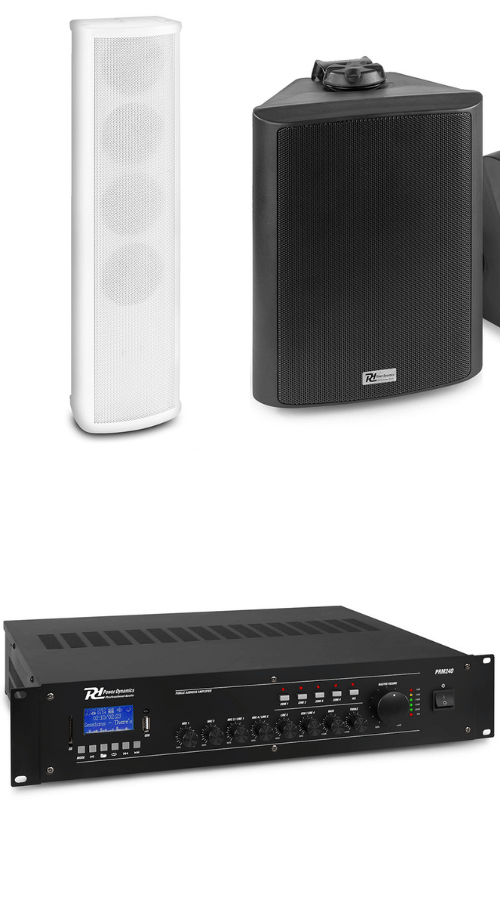
Speakers are the most visible part of any system. Ceiling speakers are often used for discreet background music in offices and retail spaces. Wall-mounted models suit hospitality venues and gyms, while column speakers are commonly chosen for churches where speech clarity is critical. The choice depends on your coverage requirements and the building layout.
Amplifiers and mixers form the backbone of a commercial audio system design. They power the speakers, control volume levels and manage different input sources. In larger buildings, multi-zone amplifiers allow separate areas to operate independently, which is particularly useful in schools, multi-room offices and hospitality settings.
Source equipment is another important consideration. Many modern systems include Bluetooth, CD players or streaming capability to give users simple day-to-day control. Ease of use should always be factored into the design so that staff can operate the system confidently.
Cabling and infrastructure are equally important. Proper cable routing, suitable power supply and allowance for future expansion all contribute to a dependable installation.
At Audio Installations, we provide system design and drawing services for both installation and supply-only customers. Whether you are managing your own project or require full support, our team can advise on speaker layout, equipment specification and practical audio design for any building.

Pre-Designed Commercial Audio Packages
Not every project requires a custom solution. In many cases, a carefully specified off-the-shelf system provides a practical and cost-effective starting point.
Pre-designed packages are particularly useful where the layout and requirements are straightforward. They simplify sound system planning and ensure that all core components are compatible. We have put together a variety of speaker systems to suit different industries, including schools, churches, retail, industrial, hospitality and fitness settings.
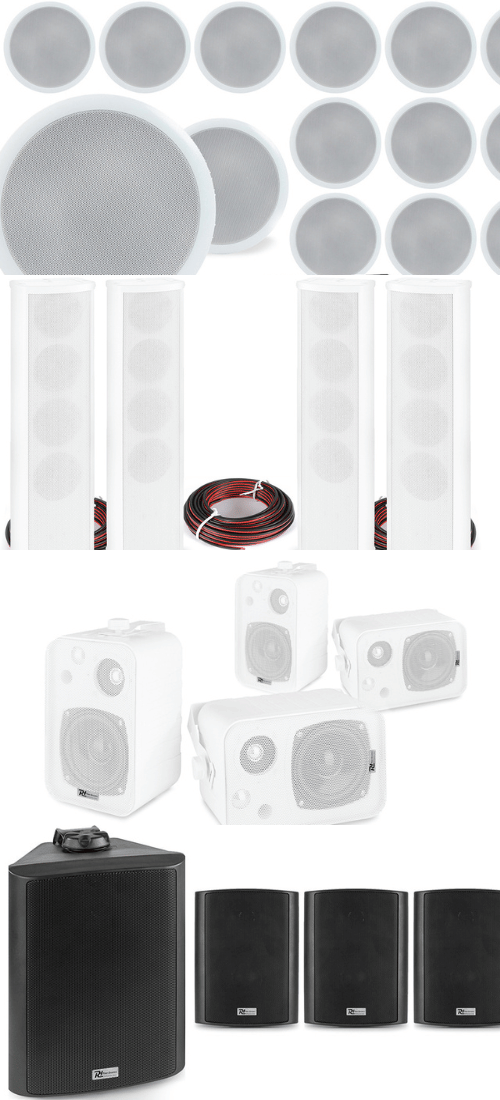
For schools, an example is our 20 x 6.5" Ceiling Speaker System with a Bluetooth Amplifier. It offers wide and even coverage, making it suitable for announcements and general audio across classrooms and corridors.
Church environments often require strong speech clarity. The 4 x ICS4 Indoor Column Speaker System is designed to deliver focused sound projection, helping spoken word carry clearly throughout a large space. The column speakers have a modern and discreet design, helping them to blend in subtly.
In office settings, the 2-Zone Wall Mount Background Music System allows separate volume control between areas such as reception and workspaces, supporting flexible audio system design. The four white wall-mount speakers blend in discreetly in office environments, and the included mixer amplifier features Bluetooth for easy wireless streaming of audio.
Retail environments benefit from consistent background music. This Shop Sound System with 8x Ceiling Speakers, CD Player and Spotify is ideal for day-to-day operation. The included eight ceiling speakers provide wide coverage, and the versatile all-in-one music system and amplifier offer a choice of playback options, including Bluetooth, CD player, digital and Internet radio.
For hospitality venues such as bars and pubs, the 4 x 6.5" BC65V Black Wall Speaker System with Bluetooth Amplifier offers reliable music coverage. The included wall speakers feature a weatherproof IP56 rating, making them suitable for outdoor patio areas as well as indoor areas. The mixer amplifier features four selectable zones, Bluetooth connectivity and useful inputs for playback flexibility.
When You Need a Custom Audio System
While pre-designed packages suit many environments, some projects require a more tailored approach. Larger or more complex sites often need a detailed commercial audio system design to ensure every area performs as intended. Below are some examples of our recent custom audio solutions.
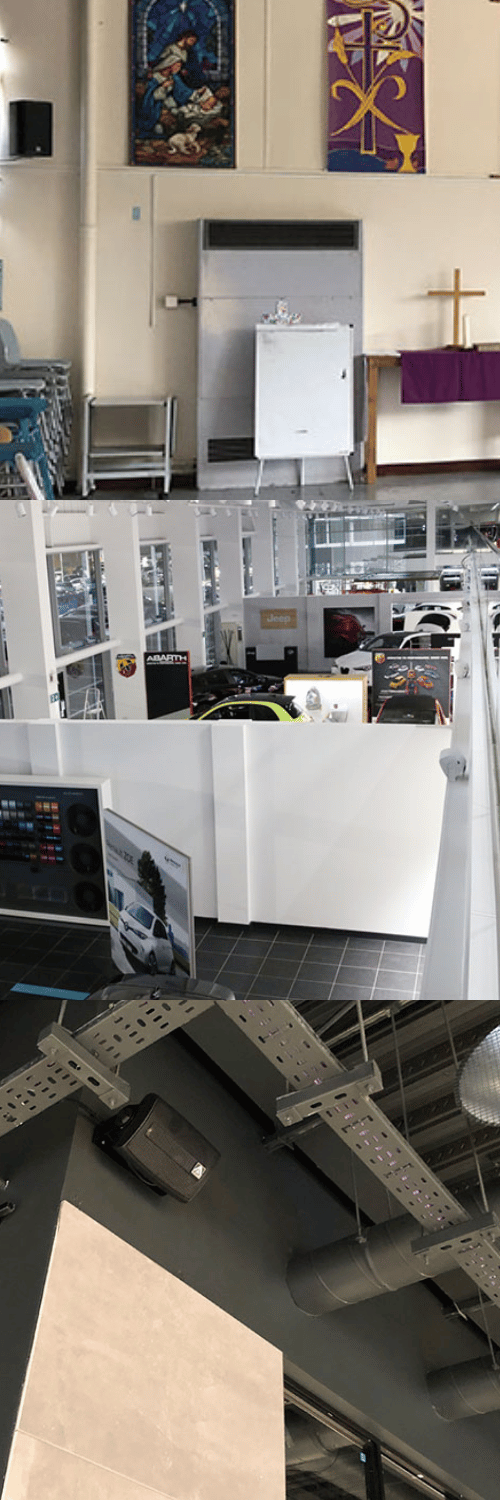
Audio Wall Mount School PA System - Coopersale and Theydon Garnon C.E. Primary School
This installation centred around a multi-purpose school hall used for assemblies, drama productions, live music and discos. Four full-range wall-mounted speakers were positioned in each corner to provide balanced coverage. Powered by an Audio HD800 amplifier, the system delivered strong clarity and controlled bass response suitable for both speech and music.
Wireless flexibility was key. Dual-channel QWM microphone receivers supported handheld and headset microphones, while a Fonestar media player enabled USB, SD and FM playback. A Fonestar MX-862 mixer was pre-configured for simplicity, with protected EQ settings to prevent tampering. The entire system was housed in a secure rack enclosure, reflecting careful audio design for an education setting.
6-Zone Background Music System - Wilsons Automobiles
This large showroom required structured sound system planning across six independent zones. A combination of 16 wall speakers and 32 ceiling speakers were installed using a 100V line system for practicality and efficiency.
A Fonestar MAZ-6600RU 6-zone matrix amplifier provided 100W per zone, assignable inputs and paging capability. Custom wooden ceiling back panels ensured secure speaker mounting within delicate dropped ceiling tiles. The result was a scalable, clearly labelled system designed for daily commercial use.
Commercial Background Music System Install - Stark Carpets
With an industrial open ceiling ruling out in-ceiling speakers, eight wall speakers were discreetly mounted around the shop floor. A low-impedance configuration was chosen to prioritise fuller sound reproduction, powered by a Fonestar SA4150 amplifier and controlled via a mixer preamp.
This tailored audio system design balanced aesthetics, performance and budget, demonstrating how bespoke solutions can adapt to the realities of each building.
Each of our custom projects relies on careful planning, considering layout, acoustics, cable routes and future expansion. Rather than forcing a space to fit a standard package, the system is designed around the building.
Our sales team works closely with clients to design audio systems to suit any setting, whether you need supply only or a fully managed installation.

The Design and Installation Process Explained
A clear process is central to a successful audio system design. From the first conversation through to handover, each stage is structured to keep projects straightforward and transparent.
It often begins with an initial conversation to understand your needs, discuss requirements and understand budget expectations. This may be followed by a free initial site visit (subject to conditions) to allow our team to assess the space. Our early planning ensures that practical factors such as layout, access and existing infrastructure are considered from the outset.
Following consultation, we prepare a system proposal. For many projects, this includes drawings that show speaker placement and equipment layout. This stage is particularly important in larger commercial audio system design projects, where clarity and coverage must be carefully mapped.
Once agreed, equipment is specified and supplied, or installation is arranged if required. Larger projects can benefit from a dedicated account manager who oversees the process step by step, from concept and design through to commissioning and finally handover.
We ensure that levels are correctly set, zones operate as intended and staff understand how to use the system confidently. Our handover includes guidance on operation and future support.
Our involvement does not end there. Ongoing aftercare is part of responsible audio design for buildings, particularly as technology develops and requirements change. We aim to design systems with expansion in mind, making updates or additions straightforward when the time is right.
Whether you require supply only or full installation, the process remains focused on delivering reliable, practical results.
Designing for Different Sectors
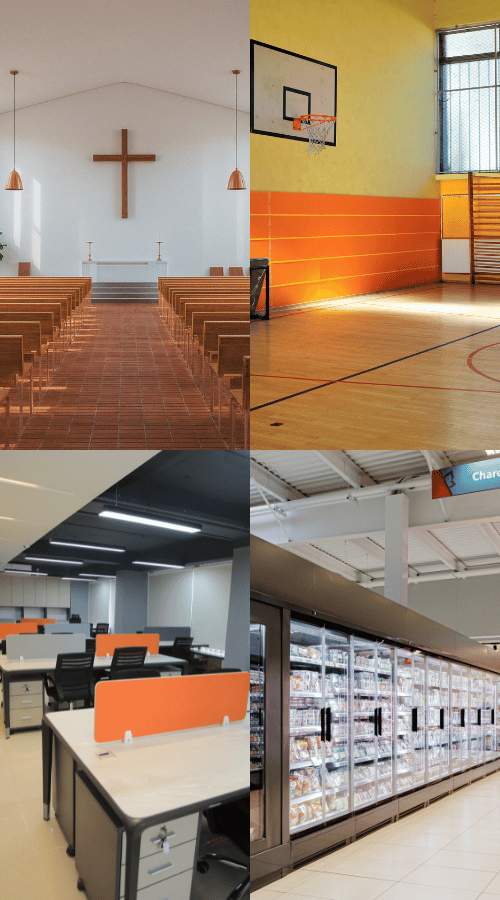
No two environments are the same, which is why commercial audio system design must reflect the needs of each sector. A system that works well in a retail shop may not suit a school or a place of worship.
In education settings, clarity and reliability are essential. Schools often require site-wide announcements, classroom coverage and, in some cases, lockdown integration. Careful speaker placement and zoning form a key part of the overall audio system design, ensuring messages are heard clearly without disruption.
Retail spaces focus on consistent background music across shop floors and customer areas. Even coverage avoids noticeable volume differences between aisles, while simple controls make day-to-day operation straightforward.
Offices typically benefit from zoned systems. Reception areas, meeting rooms and breakout spaces may need independent volume control. Careful sound system planning helps define how these areas interact and prevents over-complicating the setup.
Churches and other places of worship prioritise speech intelligibility. Column speakers and well-considered positioning are often central to effective audio design for buildings in these environments, helping the spoken word carry naturally.
Hospitality venues such as pubs, bars and hotels require flexibility. Background music during the day may give way to higher levels in the evening, sometimes across multiple zones.
By understanding the demands of each sector, it is possible to tailor the design of an audio system to support the way the space is actually used.
Future-Proofing Your Commercial Audio System
Technology continues to change, and a well-considered audio system design should take this into account from the beginning. Planning for tomorrow’s requirements can prevent unnecessary upgrades or replacements later.
One of the key aspects of future-ready commercial audio system design is scalability. Amplifiers with spare capacity, zoning systems that allow additional areas to be added, and infrastructure that supports expansion all make a difference over time.
Streaming and connectivity are also important. Many clients now expect Bluetooth or network-based playback as standard. Including flexible input options during planning ensures the system remains practical as listening habits evolve.
Cable routes and equipment locations should be chosen with care. Accessible rack space and clear labelling make future adjustments simpler. This is a central part of responsible audio design for buildings, particularly in larger premises where disruption can be costly.
Expansion does not always mean bigger. Sometimes it is about adapting the system to new uses. An office might add a breakout space, or a retail store could reconfigure its layout. Designing with flexibility in mind makes these changes easier to manage.
At Audio Installations, we consider long-term use at every stage. Our aftercare support reflects this approach, helping clients adapt their systems as needs change.

Conclusion
Effective commercial audio system design begins with clear objectives and a practical plan. Whether you are upgrading an existing system or starting from scratch, structured thinking at the outset will save time, cost and disruption later on.
From straightforward background music systems to fully zoned announcement solutions, careful audio system design ensures your building is equipped with sound that works reliably every day. By taking the time to consider layout, usage and future plans, you create a system that supports your space long term.
At Audio Installations, we supply a wide range of ready-made packages suited to schools, offices, retail environments, churches and hospitality venues. These systems provide a proven starting point for many projects and simplify early-stage planning./p>
For more complex requirements, our team can provide tailored audio solutions, working with you from concept through to installation and handover. Whether you need supply only or a fully managed project, we are here to offer clear, practical advice.
If you are planning a new project, we encourage you to explore our full range of commercial audio equipment and system packages. If you are unsure where to begin or would like to discuss a custom solution, please get in touch with our team. We are always happy to discuss your requirements and help you move forward with confidence.
